


Choosing Dog Biodegradable Poop Bags In Australia
Let's be honest, picking up dog poop isn't exactly the highlight of being a pet parent. It's a daily ritual for millions of us Aussies, but the type of bag you grab on your way out the door, whether it's a standard plastic one or one of the many dog biodegradable poop bags on the market, has a much bigger impact than you might think. Your choice matters for our local parks, waterways, and the planet.
The Paw-Print We Leave Behind 🌱
Every single walk with our furry mates is a chance to make a small but meaningful choice. It might feel like just one little bag, but when you multiply that by all the dog owners across Australia, it adds up to a mountain of waste.
The sheer volume is staggering. Australia is home to around 6 million pet dogs, and with the average dog producing about 0.2 kg of poop a day, that's over 1000 kg across a typical lifespan. All that waste, if not managed properly, can pollute our waterways and harm native ecosystems.
Unfortunately, most of it ends up in regular plastic bags. These bags can take hundreds of years to break down, and even then, they don't really go away. They just crumble into tiny, toxic microplastics that poison our soil and water for generations to come. You can dig deeper into the hidden cost of cheap plastic poop bags in our detailed guide.
More Than Just Landfill Fodder
The problem isn't just about filling up our already overflowing landfills. When dog waste is sealed inside a plastic bag, it creates an oxygen free environment. This process releases methane, a seriously potent greenhouse gas that’s a major contributor to climate change.
Choosing a better bag isn't just about waste reduction; it's about actively preventing pollution. A simple swap can help protect local wildlife, keep our communities cleaner, and reduce your dog’s carbon paw print.
Making The Switch Simple
The good news? Making a positive change is easier than you think.
Switching to a genuinely compostable bag turns a daily chore into a proactive step towards a healthier planet. These bags are made from plant based materials designed to break down into organic matter, returning to the earth without leaving nasty plastic fragments behind. In line with Australia’s national sustainability goals, this simple swap helps reduce our reliance on fossil fuel plastics and supports a circular economy.
Ultimately, this is a collective challenge that we can tackle together, one walk at a time. Beyond individual choices, understanding broader sustainable waste management strategies highlights just how important eco friendly solutions are. By being mindful of the bags we use, we can ensure our parks and neighbourhoods stay beautiful places for everyone, including our four legged friends, to enjoy.
Decoding The Labels: Biodegradable Vs Compostable ♻️
Walking down the pet aisle can feel like a pop quiz. You see words like ‘biodegradable’, ‘degradable’, and ‘compostable’ plastered on boxes, but what do they really mean? It’s easy to get confused by the marketing jargon, so let’s break it down into simple, practical knowledge for Aussie dog owners.
Understanding these labels is the key to making a genuinely eco friendly choice. Not all green sounding bags are created equal, and some can be just as problematic as traditional plastic.
What Does Biodegradable Actually Mean?
The term biodegradable simply means that a material can be broken down by living organisms, like bacteria or fungi, over time. It sounds great on paper, but the word itself is often misleading because it doesn't specify how long it will take or what it will break down into.
Think of it like this: an apple core is biodegradable, and so is a log. But one will vanish in a few weeks, while the other might take decades. Many so called "biodegradable" plastics are still petroleum based and, under the wrong conditions (like a sealed landfill), they may just fracture into tiny, harmful microplastics that pollute our environment for hundreds of years.
The flowchart below shows the all too common path of dog waste in a plastic bag, leading directly to landfill pollution.
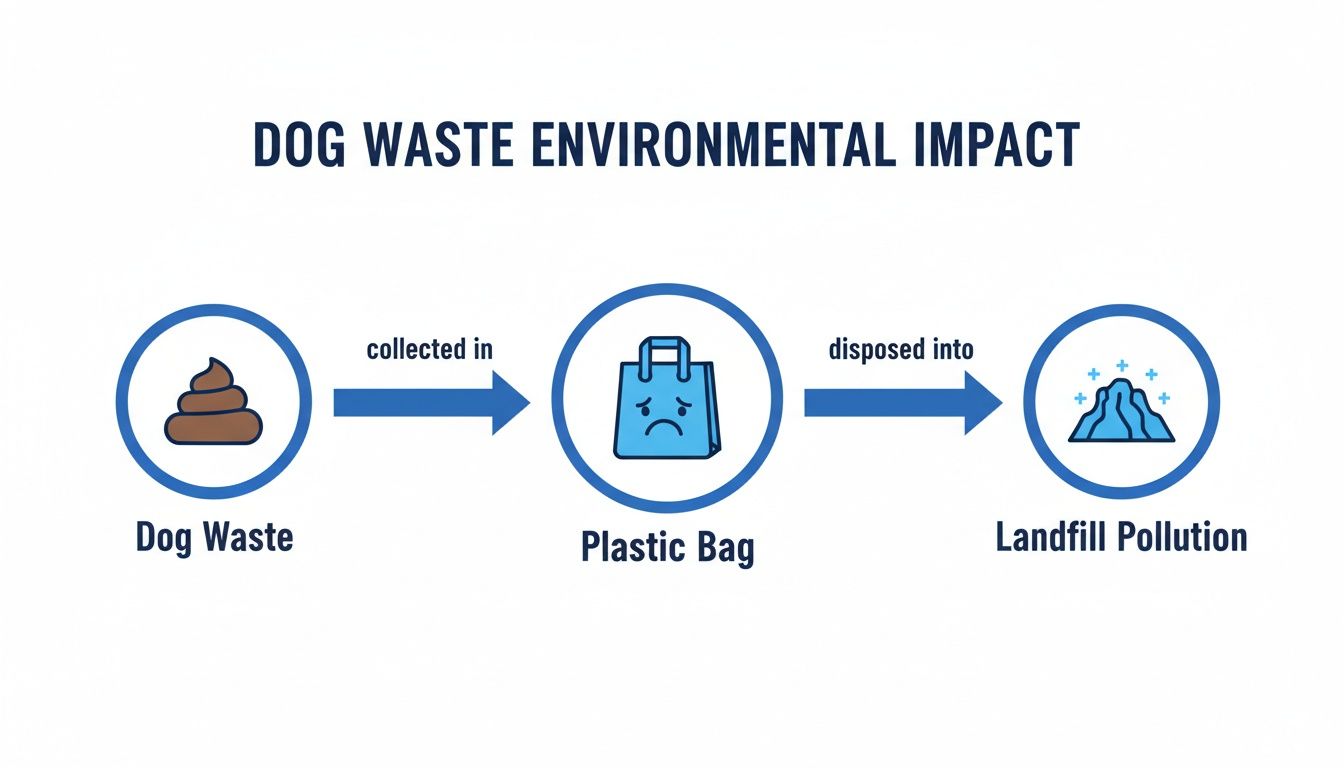
This image really highlights how using the wrong bag contributes to long term pollution, trapping waste in a way that prevents it from ever breaking down naturally.
The Compostable Difference: A Better Choice
This is where compostable bags come in. A truly compostable item doesn't just break down; it breaks down into non toxic, natural elements like water, biomass, and carbon dioxide within a specific timeframe. Essentially, it becomes nutrient rich soil food.
Compostable products are designed to return to the earth, enriching the soil instead of polluting it. They are part of a circular system, turning waste into a valuable resource.
To truly get your head around this, it helps to explore the broader benefits of compost and see how it contributes to a healthier environment. This is the gold standard you should be looking for when choosing dog poop bags. If you want to go even deeper, check out our guide to compostable poop bags for dogs to see why they're the superior option.
Home Compostable Vs Industrial Compostable
Even within the compostable category, there’s a crucial distinction for us in Australia.
- Industrially Compostable (AS 4736): These materials need the high temperatures and specific conditions of a large scale industrial composting facility to break down properly. They won't decompose in your backyard compost bin.
- Home Compostable (AS 5810): This is the certification to look for. It guarantees that the product can break down in a typical home compost setup at lower temperatures, making it far more practical for everyday dog owners.
When you see the AS 5810 certification, you can be confident that you’re buying a product that will safely return to the earth in your own backyard system (when managed correctly, of course).
A Clear Comparison
Sorting through the options can be tricky, so here’s a straightforward table to help you understand the key differences at a glance.
Dog Poop Bag Types Compared
This straightforward comparison of common dog waste bags will help you understand the materials, breakdown process, and true environmental impact.
| Bag Type | What It Is Made From | How It Breaks Down | True Environmental Impact | Best Disposal Method |
|---|---|---|---|---|
| Traditional Plastic | Fossil fuels (petroleum). | Takes 500+ years, fracturing into microplastics. | High. Contributes to landfill, ocean pollution, and releases toxins. | General waste bin (landfill). |
| 'Degradable' / Oxo-degradable | Plastic with chemical additives. | Additives make it fragment into microplastics faster. | Very high. Often considered worse than regular plastic due to rapid microplastic creation. | General waste bin (landfill). |
| 'Biodegradable' (uncertified) | Often a mix of plant material and fossil-fuel plastics. | Unpredictable breakdown, often leaving behind plastic fragments. | Misleading. Can still contribute significantly to microplastic pollution. | General waste bin (landfill). |
| Certified Compostable (AS 5810) | Plant based materials like corn starch and PBAT. | Decomposes into organic matter, water, and CO2 in a home compost environment. | Low. Reduces landfill waste and enriches soil when composted correctly. | Dedicated home pet waste compost system. |
By choosing certified home compostable bags, you are opting for the only solution that truly closes the loop, turning your dog's daily waste from a pollutant into a resource. This simple switch empowers you to make a tangible, positive impact every single day.
How To Choose The Right Eco Friendly Poop Bag 🐶
Alright, you’ve done the homework and get the crucial difference between a genuinely compostable bag and a dodgy ‘biodegradable’ one. Now for the fun part: picking the perfect sidekick for your daily dog walks.
Choosing the right eco friendly poop bag isn't just about the label. It’s about finding a reliable product that makes clean ups simple, mess free, and truly planet friendly.
Let's be real, no one wants a bag that fails at the critical moment. The fear of a tear, leak, or split is enough to make any dog owner anxious. That’s why the practical features of a bag are just as important as its eco credentials.
Look For Strength And Durability
One of the biggest myths about compostable bags is that they’re flimsy. While that might be true for some cheap imitations, a high quality compostable bag is engineered to be tough, durable, and completely up to the task.
Here’s what to look for to avoid any messy mishaps:
- Bag Thickness: You want bags described as extra thick. A thicker bag provides a much needed barrier between your hand and the mess, giving you peace of mind and preventing accidental punctures.
- Leak Proof Design: A well made bag should be guaranteed leak proof. This means strong seals and quality material that won't give way, ensuring a stress free walk all the way home.
- The Right Size: Consider the size of your dog. A bag that's too small for a Great Dane is asking for trouble, while a massive bag for a Chihuahua is wasteful. Choose a size that offers plenty of room to tie a secure knot.
Decode The Australian Certifications
This is probably the most important factor when choosing a genuinely eco friendly poop bag in Australia. Without proper certification, you’re just trusting a marketing claim.
The gold standard is the AS 5810 certification for Home Composting. This isn’t just a fancy logo; it's a guarantee from an independent body that the bag has been scientifically tested and proven to break down in a home compost environment, leaving no toxic residue behind.
If a bag doesn’t have the AS 5810 certification clearly displayed, you have no way of knowing if it will truly break down in your backyard compost. It’s the only way to be certain you're not accidentally adding plastic to your soil.
Busting Common Myths
Let's clear up a few common worries pet parents have when making the switch. The truth is, modern compostable bags are designed for performance, not just the environment.
- Myth 1: "They'll break down in my bag dispenser." Nope! Certified compostable bags need the specific conditions of a compost pile, microorganisms, moisture, and heat, to start decomposing. They’ll stay strong and intact in your pocket for months.
- Myth 2: "They feel weird and flimsy." Quality compostable bags, like the ones from Bag It Wag It, feel silky smooth but are surprisingly strong. They are designed to hold their structure until you’re ready to compost them.
- Myth 3: "They must be harder to use." Not at all. They tear off the roll just as easily as plastic bags and are designed to be simple to open, even on a windy day at the dog park.
By focusing on these practical features, strength, the right size, and that all important AS 5810 certification, you can confidently choose a dog biodegradable poop bag that works for you, your dog, and the planet.
It’s about making a smart choice that doesn't compromise on quality. Ready to make the switch? You can discover compostable options with Bag It Wag It.
The Right Way To Dispose Of Dog Waste In Australia
So, you’ve made the excellent choice to switch to compostable poop bags. High five! But grabbing a better bag is only half the job. To truly close the loop and make a difference, how you dispose of it is everything.
Let's get into the nitty gritty of what to do with your dog's business once it's all bagged up. Knowing the right place to put it ensures all your good, sustainable effort doesn't go to waste.
Council Bins: The Do's And Don'ts
For many of us, the most convenient option is the council bin at the local park or the red lidded general waste bin at home. When you use a certified compostable bag, this is still a far better choice than using traditional plastic.
Why? Even in landfill, a plant based bag is made from renewable resources, unlike its fossil fuel based plastic cousins. While it won’t break down as it’s designed to without proper composting conditions, you’re still avoiding adding new, virgin plastic into the waste stream.
The big question we always get is about the green bin.
A crucial rule to remember is that you generally cannot put dog waste into your council's FOGO (Food Organics and Garden Organics) or green waste bin. Most councils strictly prohibit it due to the risk of harmful pathogens contaminating the final compost, which is often used in public parks and gardens. Always check your local council's website for their specific rules.
The Home Composting Option
For those ready to take their eco game to the next level, home composting is a fantastic solution. It completely diverts your dog's waste from landfill and turns it into nutrient rich soil for your ornamental plants.
It's not as tricky as it sounds, but it does require a dedicated system that's kept separate from your regular veggie patch compost. For health and safety reasons, this separation is non negotiable.
A dedicated pet waste composter or a separate enclosed bin works best. The goal is to create the perfect environment for microorganisms to work their magic and break everything down safely, including the certified compostable bag. You can dive deeper into the specifics by reading our full guide on how to compost dog poop safely at home.
This approach tackles waste right at the source, which is incredibly important when you look at the bigger picture. Australia generates a staggering 75.8 million tonnes of waste every year, and a huge chunk of that is plastic that never gets recycled. Adopting practices like home composting directly helps reduce your household's contribution to these massive landfill figures. You can learn more about Australia's waste challenges by exploring recent national waste reports.
Simple Steps For A Pet Waste Compost System
Ready to give it a go? Setting up your system is surprisingly straightforward. It’s all about getting the right mix of materials to create a healthy, happy compost pile.
Here’s a simple process to follow:
- Choose Your Spot: Find a sunny, well drained spot in your garden for your dedicated pet waste compost bin. Make sure it's away from veggie gardens and kids' play areas.
- Layer It Up: Start with a base layer of carbon rich "brown" materials like shredded newspaper, dead leaves, or sawdust. This helps with aeration and keeps smells under control.
- Add The "Greens": Add the bagged dog poop (the "green" nitrogen rich material). You're aiming for a ratio of roughly two parts brown material to one part green material.
- Cover And Moisten: Cover the waste with another layer of brown material. Keep the pile slightly moist, like a wrung out sponge, but not soaking wet.
- Turn Occasionally: Every few weeks, give the pile a turn with a garden fork to mix everything up and introduce oxygen, which really speeds up decomposition.
- Wait Patiently: It can take several months to a year for the compost to be ready. You'll know it's done when it looks and smells like rich, dark soil.
Just remember, this finished compost should only ever be used on ornamental plants, shrubs, and trees, never on anything you plan to eat. By taking these simple steps, you can turn a daily chore into a powerful act for the planet.
Simple Swaps For A Greener Dog Lifestyle 🐾
Making a real difference for the planet goes way beyond just the poop bag. While choosing the right dog biodegradable poop bags is a fantastic start, it's really just one piece of a much bigger, greener puzzle. Building a truly sustainable lifestyle with your furry mate is all about the small, thoughtful choices we make every day.
This is about creating a community of conscious pet owners who want the best for their dogs and the beautiful Aussie environment we all share. It’s not about perfection; it's about making simple swaps that add up to a big difference.
Beyond The Bag: Practical Tips
Ready to shrink your dog's environmental paw print? It’s easier than you think. A few simple adjustments to your routine can seriously cut down on plastic waste and help keep our parks and waterways clean.
Here are a few easy ideas to get you started:
- Choose Eco Friendly Toys: Ditch the cheap plastic junk. Look for toys made from natural, renewable, or recycled materials like rubber, hemp, or recycled plastics. They’re often way more durable and much kinder to the planet.
- Mind The Food Packaging: Opt for dog food brands that use recyclable or minimal plastic packaging. Some brands even offer bulk bags or return and refill programs, which is a brilliant way to cut down on waste.
- DIY Dog Treats: Baking your own dog treats is a fun way to control what your pup eats and avoid all the plastic that comes with store bought snacks. Plus, your dog will absolutely love you for it!
This shift towards eco friendly pet products isn't just a local trend; it's part of a global movement in responsible pet ownership. Even the market for simple tools like dog poop scoopers is growing, driven by dog owners demanding better, more sustainable options. You can discover more insights about this growing market here to see just how much things are changing.
Frankie's Corner: A Dog's Tale
G'day, mates! Frankie here. My human and I had the best arvo at the park today. The sun was out, the grass was green, and the smells were top notch! I chased my favourite bouncy ball until my legs felt like jelly.
But the best part? The park was super clean. My human says it's because all the other dog owners are getting smart and using those special bags that don't leave nasty plastic bits behind. It makes me do a happy wiggle to know our favourite sniffing spot will stay beautiful.
When we see a clean park, it means more room for zoomies and less yucky stuff to dodge. A big paws up to all the humans who help keep our playgrounds awesome. Now, if you'll excuse me, all this adventuring has earned me a serious nap!
Your Questions About Eco Friendly Poop Bags, Answered
Making a change in your daily routine, even a small one, always comes with a few questions. We get it. When it comes to something you do every day, like picking up after your dog, you want to know you’re making the right call.
That’s why we’ve put together a no nonsense FAQ section to clear up the common queries about eco friendly poop bags. Let's tackle everything from performance worries to proper disposal, so you can feel 100% confident in your choice.
Are Compostable Poop Bags Really Better For The Environment?
Yes, absolutely, but with one massive condition: you have to choose certified compostable bags. There's a universe of difference between a genuinely compostable product and something with a vague 'biodegradable' label slapped on it.
Traditional plastic bags stick around for centuries, breaking down into nasty microplastics that pollute our soil and water. Certified compostable bags, on the other hand, are made from plant based materials designed to break down completely into natural, non toxic goodies like water, biomass, and organic matter.
This whole process cuts down the waste heading to our overflowing landfills and stops plastic pollution from spoiling our beautiful Aussie parks and waterways. When you see an Australian home compostable certification (AS 5810), you know you're holding a product that's been proven to return safely to the earth. It's simply a smarter, more responsible choice for the planet.
The real environmental win is turning waste into a resource. A certified compostable bag is designed to enrich the soil, not pollute it for generations to come.
Can I Put Compostable Dog Poop Bags In My Council Green Bin?
This is a super important question, and the answer is almost always a firm no. Even if the bag itself is certified compostable, the vast majority of Australian councils don't allow any pet waste (poop included) in their FOGO (Food Organics and Garden Organics) or green waste bins.
Why the strict rule? It all comes down to public health and hygiene. Dog waste can carry harmful pathogens, bacteria, and parasites that can survive the industrial composting process. This could contaminate the final compost product, which is often sold back to the community for veggie patches or used in public parks.
Being a responsible pet parent means respecting these local guidelines. Always jump on your local council's website to check their specific rules before tossing anything other than approved food and garden scraps in your green bin.
How Do I Safely Compost Dog Poop At Home?
Composting dog waste at home is a fantastic way to keep it out of landfill, but it has to be done safely and, crucially, separately from your regular garden compost. You should never, ever add pet waste to a compost pile that will eventually be used on your veggie garden or fruit trees.
You’ll need a dedicated, enclosed pet waste composting system. This ensures the pile gets hot enough to zap any potential pathogens.
Here’s the simple process:
- Get the Mix Right: Layer the dog waste (your "greens") with carbon heavy materials like sawdust, shredded cardboard, or dry leaves (your "browns"). A good rule of thumb is about two parts brown material to one part waste.
- Keep It Moist: The pile should feel like a damp, wrung out sponge, not soggy and not bone dry.
- Give It a Stir: Turn the pile with a garden fork every couple of weeks. This gets oxygen in there, which helps the good microorganisms do their job.
The finished product is a brilliant soil conditioner for non edible plants. Use it on your ornamental shrubs, flowers, and trees to give them a nutrient boost. Just remember to always handle the finished compost with gloves and wash your hands thoroughly afterwards.
Will A Compostable Bag Leak Or Break During A Walk?
It’s a totally fair concern, we’ve all had that heart stopping moment walking away from a clean up, praying the bag holds. But here’s the good news: a high quality, certified compostable bag is engineered to be just as tough and reliable as its plastic cousin.
Reputable brands design their bags to be durable, extra thick, and leak proof, so they can handle the job without any messy surprises. They're specifically made to only start breaking down when they meet the microorganisms, heat, and moisture found in a compost environment.
A well made compostable bag won't start falling apart in your hand, in your pocket, or on the dispenser. It’s designed to stay strong and intact for a clean, stress free walk every single time. The plant based materials actually have a silky yet tough feel, proving you don't have to give up performance to make an eco friendly choice.
Ready to make your daily walk a small act of environmental care? With Bag It Wag It, you get planet friendly, home compostable poop bags delivered right to your door. Our extra thick, leak proof bags make clean ups easy, so you can scoop responsibly and wag more.
Explore our flexible subscriptions and make the switch today!